
Some patients do not have enough bone in the upper back jaw for dental implants. This often happens because the sinus sits low or because bone has been lost after teeth were removed. A sinus graft, also called a sinus lift, can help rebuild this bone so implants can be placed in a stronger and more stable position.
Dr. Sudbrink performs sinus grafting with modern technology designed to improve precision, protect delicate anatomy, and support healing.
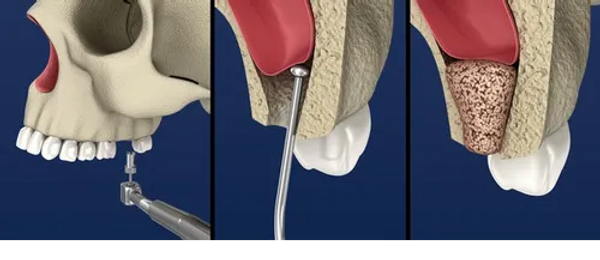
The sinus membrane is very thin. During a sinus graft, the surgeon must gently lift this membrane and place bone graft material underneath it. This is a delicate procedure.
Using the right technology can make a major difference. Dr. Sudbrink uses tools such as piezoelectric instruments and PRF to help perform sinus grafts in a careful, controlled way.
Piezoelectric instruments use ultrasonic vibration to cut bone in a very precise way. Unlike regular drills or burs, piezo instruments are designed to cut hard tissue while being gentler around soft tissue.
This can be helpful during sinus grafting because the sinus membrane is delicate. Piezo technology allows Dr. Sudbrink to create the sinus access window and work around the membrane with more control.
Benefits of piezo technology may include:
PRF stands for platelet-rich fibrin. It is made from a small sample of the patient’s own blood. The blood is spun in a centrifuge to concentrate natural healing cells, platelets, and fibrin.
Dr. Sudbrink may use PRF with bone graft material during sinus grafting. PRF can help create a more natural healing environment and can help hold graft material together.
PRF may help by:
Sinus grafting is not just a mechanical procedure. It requires judgment, experience, and a clear understanding of sinus anatomy, bone quality, implant planning, and healing.
Dr. Sudbrink has extensive experience in oral and maxillofacial surgery and uses modern surgical technology to help plan and perform these procedures carefully.
Every case is different. Some patients need a small vertical sinus lift at the time of implant placement. Others need a larger lateral sinus graft before implants can be placed. Dr. Sudbrink evaluates the patient’s 3D imaging, bone height, sinus shape, and overall implant plan before recommending the best approach.

The goal of sinus grafting is to create enough healthy bone to support dental implants in the upper back jaw. Dr. Sudbrink’s approach focuses on:
Patients choose Dr. Sudbrink because sinus grafting is a procedure where training and experience matter. As an oral and maxillofacial surgeon, he is trained to manage advanced bone grafting, sinus anatomy, implant surgery, sedation, and surgical complications.
His use of piezo instruments and PRF reflects a modern, thoughtful approach to sinus grafting and dental implant preparation.
If you have been told you do not have enough bone for dental implants in the upper jaw, Dr. Sudbrink can evaluate your case and discuss whether a sinus graft is needed.
A consultation can help determine:
Call today to schedule an evaluation with Dr. Steven Sudbrink.
We use cookies to analyze website traffic and optimize your website experience. By accepting our use of cookies, your data will be aggregated with all other user data.